
From research to translation: Photon Foundry is advancing quantum-light technology beyond the lab
21 Jul, 2026
Translation in deep tech is its own craft. Strong science isn’t enough. Fabrication discipline, customer discovery, ecosystem support – you need all of it.
In this TMOS Translation story, we look at Photon Foundry – which is one of the cleanest examples of that craft working in Australia: a TMOS research group, two of the country’s strongest quantum scientists, and a CEO who chose to go all-in.
Quantum technologies have spent much of the past decade described in the future tense: scientifically persuasive and commercially promising, but always a few years away. Photon Foundry belongs to a newer wave of companies working in the present. Its focus is on what can be built now, for real users and real systems, and on the engineering discipline required to move from laboratory demonstration to hardware that can be manufactured and deployed.
Co-founded by Dr Byron Villis, Professors Igor Aharonovich and Milos Toth, Photon Foundry is built on more than a decade of work at the University of Technology Sydney in quantum nanophotonics, materials, and device fabrication. Its immediate focus is single-photon technology based on hexagonal boron nitride, or hBN, a material that has attracted global attention as a host for quantum emitters. In simple terms, the company is working to turn highly specialised quantum-light sources into practical hardware: something that can move beyond the specialist optical table and begin to function as a reliable subsystem within broader photonic architectures.
The timing, the founders argue, matters. Across the quantum sector, the conversation is beginning to shift from proof-of-principle physics toward deployable subsystems. For years, the field has been energised by scientific milestones proving that certain effects or behaviours were possible. The next challenge is one of packaging, reproducibility, and engineering discipline: what happens after the first breakthrough paper, when a technology must leave the shelter of the lab and begin to answer to customers, partners, and supply chains.
Photon Foundry’s structure reflects that challenge. Igor helped establish the scientific foundation through early work on solid-state quantum emitters, including the co-discovery, with Milos, of single emitters in hexagonal boron nitride. At UTS, his research has helped define the field internationally, showing that hBN could serve as a serious platform for room-temperature quantum emitters and opening a path toward technologies relevant to communication, sensing, and computing. Milos brings a different but equally essential dimension. His background spans UTS, Cambridge, and semiconductor industry research and development, with deep expertise in charged-particle beam nanofabrication and device engineering. Byron, who now leads the company as CEO, sits at the junction between those capabilities and the demands of translation. With more than fifteen years across academic and industrial quantum programs, he has built his career around the practical question that often follows scientific progress: how do you turn a compelling result into a usable technology?
That question shapes how the company presents itself. Rather than a speculative catalogue of futuristic products, it describes a staged platform model with a defined engagement, a credible evidence base, and a manufacturability problem to solve. Today, that means early access and sample-based engagement. In the near term, it means developing plug-and-play photon modules for partners who want dependable sources without having to become experts in the underlying emitter physics. Beyond that lies the more sophisticated challenge of photonic integration: embedding those emitters into the kinds of compact, robust architectures that can connect with modern communications systems, sensing platforms, and future mobile technologies.
“There is no way to fit an optical bench inside a phone or on a drone.”

CEO & Co-Founder
Byron captures the practical reality better than most technical descriptions can. Scientists know how to work with complex optical benches, bulky instrumentation, and carefully controlled experimental environments. Those conditions are appropriate for discovery, but they are not where the technology can stay. If quantum-light technology is to move beyond specialist laboratories, it must be packaged and stabilised to fit the constraints of real systems. The question is no longer whether a quantum emitter works, but whether it works repeatedly, economically, and in a form factor that someone else can design around.
For Byron, the decision to commit fully to Photon Foundry came as scientific readiness and institutional backing converged. Support from UTS and TMOS helped make that shift possible, financially and in conviction. In deep technology, belief from the ecosystem around a project can be the difference between an intriguing translational prospect and a company serious enough to deserve full-time leadership. Byron has also been candid about what made the opportunity difficult to ignore: the demand for the company’s single-photon emitter samples is real. This is ahead of any long-range roadmap, that is typically for this sector. In a field where many commercial conversations still look to the decade ahead, this is a distinct signal they are keen not to ignore.
It also shapes how Photon Foundry thinks about markets. Rather than trying to claim the entire future of quantum at once, the company’s logic is more disciplined. Build the useful product customers need today; use those relationships to refine form, performance, and integration; then extend the platform into more sophisticated systems. That approach allows the company to remain ambitious without becoming abstract. The larger horizon remains visible in the background: secure quantum communications, highly sensitive sensors, and more advanced photonic computing architectures. But the immediate work is grounded in a much simpler imperative. Solve the photon-source problem in a way that others can trust, making a wider range of applications a reality.
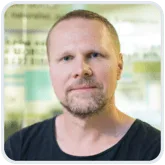
CTO & Co-Founder
Milos’s contribution sharpens that view. He describes the true bottleneck in this area as robust, scalable fabrication and device engineering, rather than any lack of scientific imagination. In his formulation, translation requires a shift from “R” to “D”: from research as an end in itself to development as an organising principle. That distinction is easy to state and difficult to execute. Research celebrates novelty; development demands repeatability, process discipline, cost awareness, and a willingness to optimise for manufacturability as much as for performance. In that sense, Photon Foundry is part of a broader maturation of the quantum sector, one in which the health of the field will be determined as much by who learns to fabricate promising phenomena well as by who discovers them.

CSO & Co-Founder
Igor’s role ensures that this engineering shift does not come at the expense of scientific depth. His work at UTS has helped create one of the country’s strongest bases in quantum emitters and nanophotonics, and that matters because translation only holds up when the science beneath it stays strong. Photon Foundry is not leaving research behind so much as carrying it into a different phase, one that asks new questions of the same underlying capability: what does this technology look like as hardware, how does it reach users, and what can be built around it?
The founders’ own description of their internal culture is revealing: they challenge and stress-test everything internally while maintaining a unified front externally. Companies built from frontier science earn credibility through scrutiny and candour, by interrogating their own assumptions before the market does it for them. That discipline is part of the commercial mission, not an addition to it.
There is also a broader Australian dimension to the story. Photon Foundry sits within a national conversation about how research excellence becomes enduring capability. In quantum technologies especially, sovereign capability is more than a policy phrase: it concerns who can supply enabling components, who can participate in future value chains, and whether foundational technologies are built and understood locally or simply imported. Photon Foundry’s founders speak about this carefully, but clearly. Their work advances a promising platform and, in doing so, contributes to the deeper infrastructure of a future quantum ecosystem.
For that reason, Photon Foundry reads less as a startup profile than as a case study in translation. It brings together scientific discovery, fabrication expertise, and entrepreneurial commitment at a moment when the sector is beginning to demand exactly that combination. The lab bench still matters; it is where the capability was made. The company’s larger significance lies in its determination to make that capability useful in the world beyond it.